
This presentation, Knowing your Rights in a Civil Facility, is being brought to you by the Advocacy Center for Persons with Disabilities, Inc. The Advocacy Center is federally funded and designated by the Governor as Florida's protection and advocacy agency. We want to share the information with you about the Advocacy Center; talk to you about your rights; share ways in which you can get your complaints heard and help you become a better self-advocate.
Person Served (PS): So what does the Advocacy Center do? Advocate (A): The Advocacy Center provides information and referral, we investigate some incidents of abuse, neglect, and rights violations and we also advocate for individuals with disabilities.

PS: I didn't know I had any rights. A: Everyone has rights. Your rights in a civil facility come from the U.S. Constitution, the Florida Constitution, the Florida Statutes and Rules, Department of Children and Families Policies, Facility Policies and court decisions. This facility is required to keep a copy of Chapters 394 and 916, Florida Statutes and Rules 65E-5 and 65E-20, Florida Administrative Code, available for review.

PS: What is advocacy? A: Advocacy is defending a cause or speaking up about issues or concerns. An advocate is someone who speaks or writes in support of someone else. Self-Advocacy is people speaking up for themselves about their needs, wants and/or wishes.
PS: On my admission paperwork I was asked to name a representative. What is a representative and what do they do? A: A representative can be a family member or a friend who you want to be notified of court hearings, in emergency situations and if you want, they can be invited to your Recovery Team meetings.

PS: So, what are some of the other rights I have while in a state mental health facility? A: While in a facility, you have the basic individual rights that include: * To be treated with respect and to be free of abuse or neglect.

A: * You have the right to appropriate clothing and 3 nutritious meals a day.
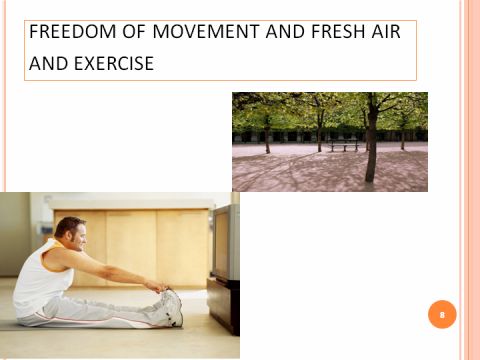
A: * You have the right to have freedom of movement -- unless restricted by a doctor's order or a judge; plus fresh air and exercise breaks -- unless restricted due to medical or security reasons.

A: * You also have the right to treatment that meets your needs and treatment in the least restrictive setting.
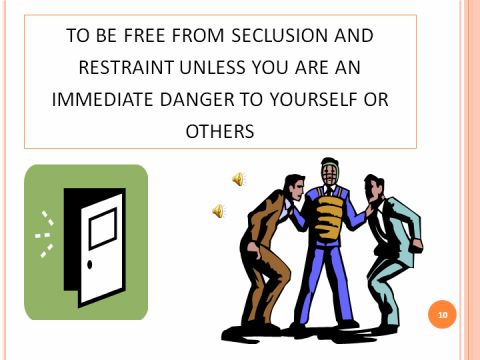
PS: I don't know much about seclusion or restraint. Can you tell me about that? A: Sure! Seclusion should only be used to keep a person safe during an emergency situation, by restricting their ability to move about freely and keeping them away from other persons. Restraints should only be used to keep a person safe in an emergency situation, by physically holding a person, involuntarily medicating a person, or by mechanical restraints. You have the right to be free from seclusion and restraint unless you are an immediate danger to yourself or others.
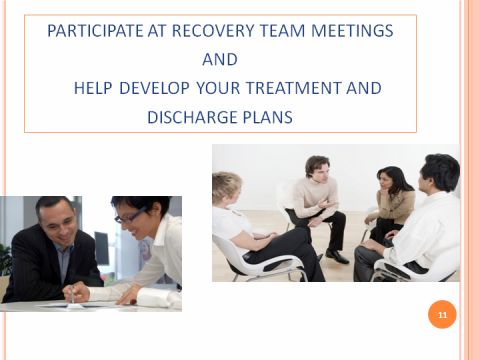
PS: You mentioned a Recovery Team before. Who are they? A: A Treatment Team, or as they are known in many facilities, a Recovery Team, is a group of professionals that are assigned to help you get the treatment you need so you can be discharged from this facility. The Team is usually made up of a social worker, a nurse, a medical doctor, a psychiatrist, and sometimes others. They help you develop a treatment plan and a discharge plan. You have the right to be involved in the development of your treatment plan and your discharge plan.
PS: So are the doctors going to force me to take medication? A: You have the right to be informed of your treatment options and to give consent to treatment; to know the potential side effects of any medication or treatment; and to withdraw consent to treatment made by you. If it is determined that you are unable to make good treatment decisions for yourself, your guardian or guardian advocate will provide express and informed consent to treatment.

PS: So they can't force me to take medication? A: If a doctor decides that you need to take medication for your condition and you refuse it, medication may be forced upon you if you become a danger to yourself or others. If the court has taken away your right to consent to treatment, then a guardian or a guardian advocate can make treatment decisions for you.

PS: How will staff know how to help me if I get upset? A: The goal of the staff is to help you, not harm you. Upon admission you were asked to fill out a Personal Safety Plan. This form helps staff know how to help you if you become upset. On the Personal Safety Plan you state what types of things help you calm down when you are upset, what kinds of things make you angry, signs of distress, medical conditions, helpful medications, your trauma history, and other things.
PS: Can I stay in touch with family and friends while I'm in this facility? A: Yes, you have the right to talk privately by phone and during visitation unless the communication is found to be harmful. Phone time is usually before and after program hours. Ask the staff at your facility about these times. You also have the right to send and receive private mail.

PS: What can I do if I believe I've been abused or neglected? A: If you believe you've been abused or neglected, you have the right to call the Florida Abuse Hotline at 1-800-96-ABUSE. This phone number should be posted next to every resident telephone in the facility.
PS: Will my phone calls be restricted? A: The facility must have a policy on when the phone is available for use. You may not be allowed to use the phone during treatment hours unless you want to call the Florida Abuse Hotline, the Florida Local Advocacy Council, the Advocacy Center for Persons with Disabilities, Inc., or your attorney. You should be able to make these calls anytime. Your right to communicate freely can be restricted if it is deemed to be harmful to yourself or others. If restricted, you must be provided with a written notice stating the reason and the length of the restriction. The order limiting phone usage must be reviewed every 7 days.
PS: Staff are always writing in my chart. Can I see what they are writing? A: Yes, you are supposed to have reasonable access to your own records unless it is thought to be harmful to you. Talk to your Recovery Team if you have questions. You also have the right to give permission to specific people or agencies to review your record.
A: Without your consent, a facility can release your records to: * the court, your attorney, the state attorney, the Department of Children and Families, Department of Corrections, an aftercare provider, researchers for statistical and research purposes, the Medicaid Fraud Control Unit, appropriate mental health professionals, the Agency for Health Care Administration, the Florida Advocacy Councils, and others by court order. * If a person threatens harm to another person, that information can be released to provide an adequate warning to the person threatened. * And a person's parents or next of kin may receive a limited summary of the treatment plan and the current physical and mental condition of a resident without the resident's consent.

PS: I was asked if I had a Mental Health Advance Directive. What is that? A: A Mental Health Advance Directive is a document that you fill out when you can make good choices about your treatment. It goes into effect if your doctor thinks you have become unable to make good decisions about your treatment. Examples of what you could put in a Mental Health Advance Directive: * Your choice of medication and treatment, * How you react to seclusion and restraint, * Your Personal Safety Plan, * You can name someone to make decisions for you if you are determined unable to do so and also you can name people to be notified if you are admitted to a psychiatric facility.
PS: Can I file a complaint with the facility if I don't like how I'm being treated? A: Yes, each facility is required to have a complaint process. We recommend that you attempt to have your complaint resolved first by talking with staff but you may request a complaint form from staff if you wish to make a formal complaint. The complaint process should be posted by the resident telephone. You should receive a written response to a formal complaint within about 7 days. If you are not satisfied with the response you receive, you have the right to appeal the decision to the facility administrator. Staff can help you do this.
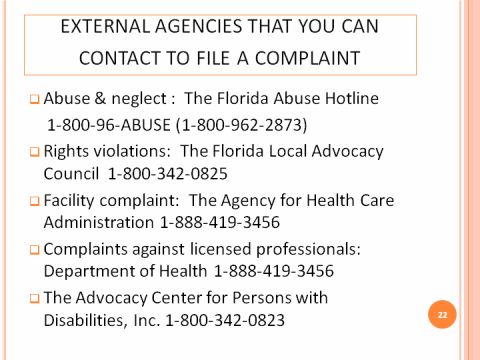
A: There are also outside agencies that may be able to help with your complaint. The Florida Abuse Hotline handles abuse and neglect complaints. The Florida Local Advocacy Council is made up of volunteers appointed by the Governor of Florida to investigate complaints against Department of Children and Families provider services. The Agency for Health Care Administration investigates complaints against facilities. The Department of Health takes complaints against licensed professionals such as doctors, nurses, clinical social workers or anyone who is licensed by the State of Florida but you must contact the Agency for Health Care Administration to file the complaint.
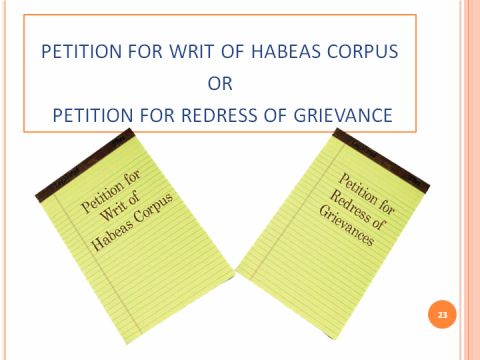
PS: The court put me here, how can I go back before the court? A: If you have a reason to question your placement in this facility, question a denial of a right or privilege or question a procedure not being followed - you have the right to file a Petition for Writ of Habeas Corpus or a Petition for Redress of Grievance. These forms are available to you by asking staff on your living unit, asking the Resident Advocate, asking a member of your Recovery Team or from the facility attorney. If you are involuntarily committed under the Baker Act, the court must review your case every six months until you are discharged.

PS: Can I vote while in a state mental health facility? A: You have a right to vote in local, state and federal elections if you are legally competent, eligible and registered to vote. For further details you may speak with your social worker, the resident advocate or a Recovery Team member.
A: As mentioned before, you have a right to be involved in your discharge planning. If you were admitted voluntarily and request a discharge, you will be discharged within 3 working days unless you are found to meet the criteria for involuntary placement. After you are discharged you may choose your own treatment provider unless the court has specified a certain provider of mental health services for you.
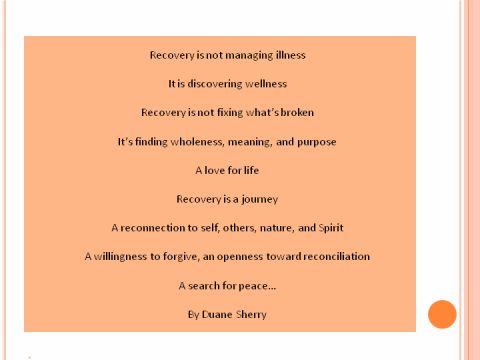
This poem was retrieved from the Hope for Mental Health Recovery website and can be found at www.recoveryhope4all.com. The is a poem by Duane Sherry. Recovery is not managing illness - It is discovering wellness - Recovery is not fixing what's broken - It's finding wholeness, meaning and purpose - A love for life - Recovery is a journey - A reconnection to self, others, nature, and spirit - A willingness to forgive, an openness toward reconciliation - A search for peace
A: We are providing you this training because you have the right to be heard and to be understood. This information has been provided to help you understand your rights and to help you become a better self-advocate.
A: Thank you for the opportunity to provide you with this information.

A: If you have any questions, our telephone number is listed next to the resident's telephones. It is 1-800-342-0823.