Before You Go: How to Check Accessibility at Florida Beaches, Parks, and Events
Friday, May 15, 2026
Friday, May 15, 2026
Planning a beach day, park visit, or festival in Florida can already feel like a full-time job. There's the weather, the parking, the snacks, the traffic, the sunscreen, the backup sunscreen, and the eternal mystery of why every outdoor event somehow has one shaded table for 4,000 people.
For people with disabilities and their families, there's another layer: will the place actually be accessible when you get there?
That question matters. The cost of bad accessibility information is real. Wasted gas. Lost money. Exhausted bodies. Missed medication timing. Disappointed kids. It can mean arriving at a beach and learning the beach wheelchair had to be reserved days ago, or finding accessible parking but no accessible route from the space to the water. It can mean showing up to a festival and discovering the portable restrooms aren't accessible, the seating is blocked, or no one knows who handles accommodation requests.
People shouldn't have to become investigators to enjoy public places. But asking specific questions before you go protects your time and your right to participate.
This isn't a list of "accessible places," because that kind of list goes stale the moment a storm damages a beach mat, a county pauses a wheelchair program, a trail closes for repairs, or an event rearranges its layout overnight. What follows are questions you can use before visiting beaches, parks, springs, festivals, fairs, markets, fireworks events, and other community spaces across Florida as a resident or vacationer.
The word "accessible" can be helpful, but it's often too vague. One place uses it to mean accessible parking. Another uses it to mean an accessible restroom. A third uses it because one part of the site is accessible, even if the main activity isn't.
Ask what "accessible" actually means at that location. Accessible parking matters, but it doesn't answer what happens next. Can you get from the parking space to the beach, restroom, or seating area? Is the route paved, packed dirt, or loose mulch? Is the accessible restroom near the activity, or across the property?
The goal isn't to ask a hundred questions. The goal is to avoid surprises that could have been handled before anyone arrived.
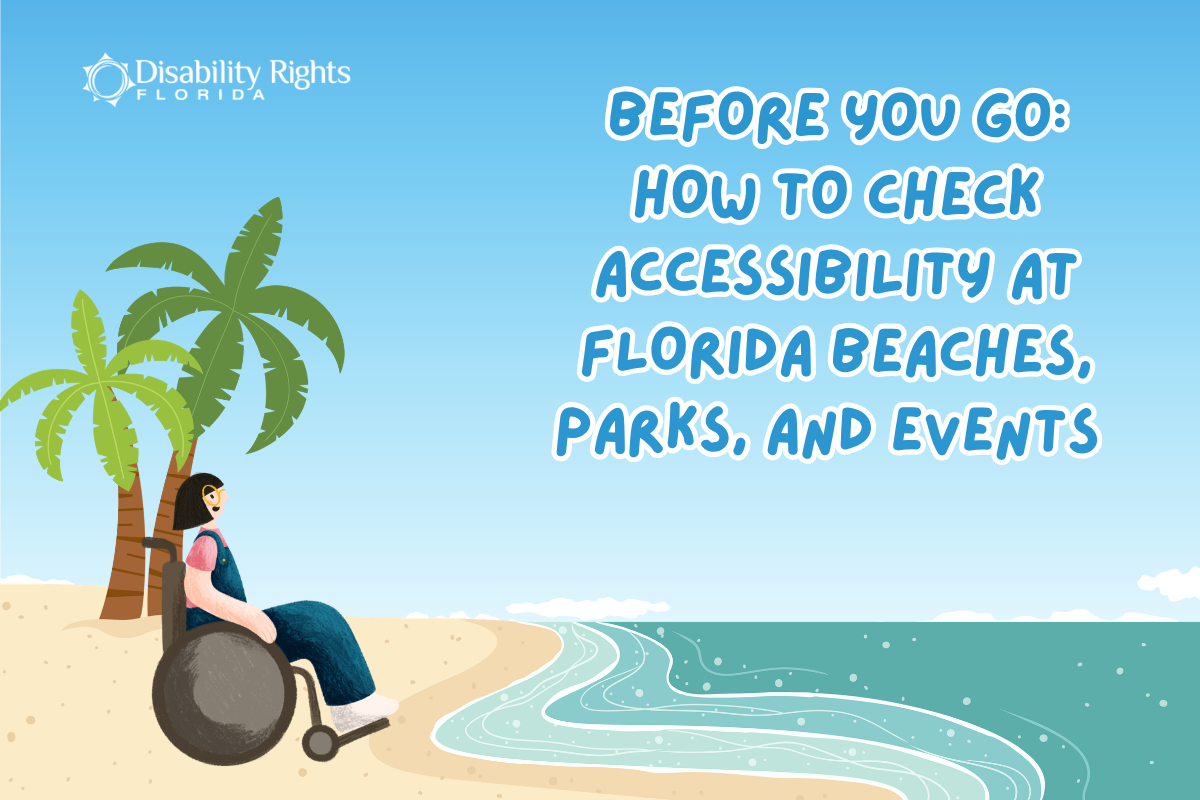
Florida beaches are beautiful, but sand isn't naturally accessible for many people who use mobility devices. A beach can have accessible parking and still be unusable if there's no firm route over the sand, no ramped dune crossover, no beach wheelchair, or no accessible restroom nearby.
Some Florida beaches and coastal parks offer beach wheelchairs, access mats, or ramped boardwalks. Florida State Parks like Honeymoon Island list elevated boardwalks to the beach and free beach wheelchairs available at the ranger station. But what's actually there can change by season, by staffing, and by weather.
Before you pack the car, contact the county beach office, city beach office, or ranger station. Don't only ask "Is the beach accessible?" Ask questions that force a clear answer:
That last question is the one most people forget. If the website says a beach wheelchair exists, but the chair is locked in a storage area and no one on site has the key, that information isn't useful. Access has to work in real life, not just on a webpage.
State parks, county parks, and city parks all manage accessibility differently. Some publish detailed information online. Others list general amenities and call it a day. Some have paved paths, boardwalks, accessible piers, or tram access. Others have natural surfaces that change after rain, storms, or maintenance work.
A "short trail" can still be brutal if it has loose gravel, exposed roots, or long stretches without shade. A park can have an accessible visitor center but no accessible route to the picnic area. A playground can have accessible parking nearby but no accessible path into the play area. Annoying? Deeply. Preventable? Often.
Before visiting, ask about the specific activity you plan to do, not just whether the park is "accessible" overall:
On adaptive equipment specifically: some Florida parks have track chairs and similar devices that can take you places a standard mobility device can't reach. Windley Key Fossil Reef Geological State Park, for example, has a powered Action Trackchair guests can use on trails and quarries at no extra cost. Florida State Parks' "Access for All" page is the right starting point, but call the specific park before you go. Some equipment is first come, first served. Some require reservations, weight or transfer requirements, or staff support. Inclement weather can pull a chair out of service for the day.
If the person on the phone says "it should be fine," ask them to describe the route, surface, distance, and restroom location. "It should be fine" is not a plan.
Springs are some of the most beautiful places in Florida. They're also some of the most complicated to access. Two springs can be part of the same state park system and handle access completely differently. Stairs at one, ramps at another, natural shoreline at a third.
The trick is to ask about the specific activity. Swimming, boat tours, picnic areas, and concession stands often have separate routes. A spring can have an accessible restroom near the entrance but not near the swimming area. A boardwalk can be accessible while the water entry isn't.
Before visiting, ask:
Florida springs hit capacity fast in warmer months and on holiday weekends. If you need accessible parking, equipment, seating, or extra time to move through the site, ask how capacity rules affect those needs. A park reaching capacity before you arrive can turn careful planning into a very expensive scenic drive.
Temporary events can be confusing because the layout changes every year. A city festival is on grass one year and pavement the next. Fireworks viewing moves because of construction. A market has accessible parking nearby but narrow vendor paths.
Event organizers should be ready to answer accessibility questions. Many aren't, which is exactly why asking matters. When people ask clearly and often, organizers learn that accessibility is part of event planning, not something to improvise after people arrive.
Before attending an event, ask:
For event organizers reading this: these aren't unusual questions. They're basic planning questions. If your event is open to the public, people with disabilities shouldn't have to send six emails and decode a map like they're searching for buried treasure just to find out whether they can attend.
Sometimes the hardest part is knowing how to ask. You don't have to share private medical information. Focus on the barriers, supports, or information you need. Pull whichever questions from the sections above match the place or event you're going to.
Copy and customize:
If you need communication access, sensory information, service animal information, or details about a specific route, add that directly. For example: "I need to know whether sign language interpreters are available by request and what the request deadline is." Or: "I need to know whether the route from accessible parking to the viewing area is paved and step-free."
If the answer is "we don't know," ask who does. That might be a park manager, city ADA coordinator, event coordinator, or county office. Ask for the answer in writing when possible, especially if you're making plans around equipment, seating, parking, interpreters, or restrooms.
If the answer is "no," ask whether there's another way to provide access. If accessible seating isn't on the event map, ask whether seating can be added. If the beach wheelchair is unavailable, ask whether a nearby access point has one. If there are no accessible portable restrooms, ask whether the organizer can arrange them before the event.
Depending on who is in charge of the location or event, the Americans with Disabilities Act may apply. Title II covers state and local government services and programs, including public parks, public beaches, public recreation programs, and city or county events. Title III covers many businesses and nonprofits open to the public.
A beach day, park visit, or community event shouldn't fall apart because no one checked whether people with disabilities could get in, move around, use the restroom, or safely enjoy the space.
Before you go, ask the questions. Save the answers. Take screenshots. Share the checklist with other people planning Florida outings. The more people ask for clear accessibility information, the harder it becomes for public places and event organizers to treat access like an afterthought.
Accessibility is not a bonus feature. It is part of whether people with disabilities can participate in everyday life. It should never be a surprise once you are in the parking lot.
Please do not leave requests for assistance in the comments. Blog comments are not monitored by intake staff and your request may not be seen. Visit our Online Intake Page to request our services.
Commenting is not available in this channel entry.Get clear, reliable updates on the issues that affect people with disabilities—without the noise or jargon. We’ll share practical information, important changes, and real stories that show how advocacy is making a difference. You’ll also learn simple ways to stay informed, get involved, and help drive meaningful change.
We care about your privacy and trust, and will never share or sell your email address.
Comments