COVID-19 and Back to School Guidance & Recommendations
Thursday, August 19, 2021
Thursday, August 19, 2021
While the benefits from in-person learning highly outweigh those of online learning, safely transitioning students back to school for the 2021 school year must be the top priority. On July 9, 2021, the Center for Disease Control and Prevention (CDC) issued updated guidance for COVID-19 Prevention in K-12 schools. These guidelines provided additional information regarding the promotion of the COVID-19 vaccines. In addition, some language was revised to include prevention strategies among students returning to in-person learning. Lastly, the guidelines have also been aligned for those individuals who are fully vaccinated.
Schools are important infrastructures within our communities. It is important for individuals involved that these guidelines be followed to improve life outcomes. Among the several critical strategies shared, the CDC emphasizes the importance of getting as many students as possible vaccinated prior to returning to the classroom to prevent the transmission of COVID-19. The following language has been added to support K-12 school districts for the 2021-2022 school year:
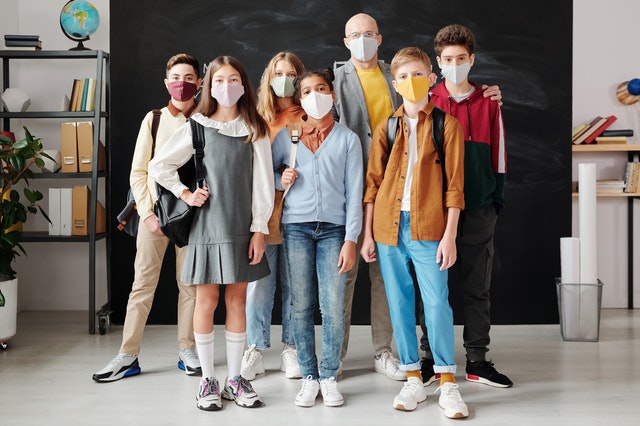
Many schools serving children under the age of 12 who are not eligible for vaccination currently are at more risk. These programs should focus on the implementation of layered prevention strategies to protect those that are and are not fully vaccinated. The CDC continues to promote and encourage the use of the following prevention strategies for all K-12 programs:
COVID-19 has brought about many challenges. However, students with disabilities may be impacted by the CDC’s requirements, specifically as it relates to masks and social distancing. While it is necessary to protect the safety of all students, some students with disabilities may require accommodations to participate fully in the classroom. Here are some accommodations that can be added to your child’s school health plan, 504 plan, or Individualized Education Plan (IEP):
The guidance from the CDC is intended to help schools, local administrators, and local health officials set appropriate and layered prevention strategies that will reduce the transmission of COVID-19 among students and staff at the school level. These strategies are all based on scientific evidence. We encourage families to look at your school’s website for more information regarding their COVID-19 protocols for the 2021-2022 school year. You can also visit Disability Rights Florida COVID-19 Resources for additional information on what procedures your county has in place.
 Selina O’Shannon is the Operations Coordinator for the Advocacy, Education, and Outreach Team and coordinates the team’s education and outreach. She joined DRF in 2003 as an Advocate-Investigator and has an M.A. in Special Education from the University of South Florida.
Please do not leave requests for assistance in the comments. Blog comments are not monitored by intake staff and your request may not be seen. Visit our Online Intake Page to request our services.
Commenting is not available in this channel entry.Get clear, reliable updates on the issues that affect people with disabilities—without the noise or jargon. We’ll share practical information, important changes, and real stories that show how advocacy is making a difference. You’ll also learn simple ways to stay informed, get involved, and help drive meaningful change.
We care about your privacy and trust, and will never share or sell your email address.
Comments