Impressions of the ADA: Olivia Babis
Thursday, July 23, 2020
Thursday, July 23, 2020
On July 26, 1990, President George H. W. Bush signed the Americans with Disabilities Act into law stating at the end of his speech, “Let the shameful wall of exclusion finally come tumbling down.” I was in junior high school at the time and I vividly remember the energy and enthusiasm surrounding the signing and implementation of this groundbreaking piece of legislation. There was so much hope and optimism in the disability community. For the first time in our country’s history, this diverse community of people who spanned every race, ethnicity, gender, and religion, unified to fight the oppression that seemed to form the very heart of its community identity. This community which has endured forced institutionalization, infanticide, forced sterilization, abuse, exploitation, and been denied education, housing, essential healthcare, transportation, and employment, was finally being provided full access to their communities. More important than the access requirements established by the ADA, the success of which is open for much debate, the ADA finally recognized the humanity of people with disabilities.
 I think the recognition of my humanity had a much greater impact on me than any of the regulations established to implement the new law. In the early years of my education, I wasn’t a particularly good student. It wasn’t that I didn’t understand the material or struggled grasping new concepts and information; I just didn’t see the point in applying myself when no one had any real expectations of me. I was expected to fail, and no one seemed overly concerned if I did. My education was treated as an act of charity and my family tried to teach me that I should be grateful just to be allowed in the classroom. I didn’t feel grateful; I felt angry. I didn’t see adults with disabilities working. I rarely if ever saw others with disabilities out in my community. There wasn’t anyone I was aware of to serve as a role model who could show me what opportunities would be available to me in my future. In my classes, I was often the only kid who couldn’t say what I wanted to be when I grew up. While my peers enthusiastically shared their dreams of becoming astronauts, superheroes, and future presidents, I remained at a loss. Superheroes weren’t disabled. All the opportunities my peers felt were within their reach weren’t available to me. No matter how hard I worked, I would never be allowed to be an astronaut. Even though I was a very active child, I was never going to be a professional athlete. Athletes couldn’t be disabled. Most of my family were members of the military, but I would never be allowed to join. No one in my immediate family had attended college. If they weren’t able to go to college then what hope was there for me? Why should I apply myself if I wasn’t going to be able to do anything?
As I listened to clips of President Bush’s speech at the ADA signing ceremony, I began to feel a connection with the people whose stories he was sharing. Their stories of discrimination were very similar to my own. Sitting on the White House lawn were other disabled people who also rejected the idea that we should be grateful for the limited rights that had been extended to us and that those rights weren’t granted to us by the Constitution and our status as citizens of the United States, but had been bestowed upon us as acts of charity and could be stripped from us at any time on the whim of others. This was the community to which I felt I finally belonged, and we were finally being recognized as full citizens who were entitled to the same rights and freedoms as everyone else. I listened to the president as he asserted that “the opportunity to blend fully and equally into the rich mosaic of the American mainstream” was to be extended to people with disabilities and for the first time I felt genuine hope for my future.
I can’t imagine what my life would have been like without the ADA, but I don’t think I would be where I am today. I doubt I would have gone to college. I’m not sure if I ever would have obtained full-time employment, bought a house, been able to drive, and become an active, respected leader in my community.
There’s no disputing that the ADA has helped to greatly improve the lives of many people with disabilities. Employment among people with disabilities increased dramatically, most large state institutions where people with disabilities had previously been warehoused have been shut down, things like ramps, curb cuts, paratransit, sign language interpreters have been commonplace. However, the ADA, like many civil rights laws, has fallen far short of its lofty goal of ensuring that, “we will not accept, we will not excuse, we will not tolerate discrimination in America.” Despite all of the accomplishments achieved by many disabled people as a direct result of the protections and requirements established by the ADA, the disability community still has the highest rates of unemployment, lacks access to reliable transportation, has the highest rate of poverty, and is frequently denied personal autonomy. The law has failed to keep up with technological innovation and the way most people access information today remains largely inaccessible to many people with disabilities. While becoming more common, people with disabilities who have obtained college degrees, full-time employment, and who live independently are still considered examples of disability exceptionalism.
When the Civil Rights Act of 1964 went before the U.S. Senate, it is said that Senator Barry Goldwater defended his vote against the bill by asserting that, while he opposed racial segregation, Congress “can’t legislate morality.” In his famous rebuttal to Goldwater’s assertion, Martin Luther King Jr claimed that Goldwater’s statement was only a half-truth declaring, “It may be true that the law cannot make a man love me, but it can keep him from lynching me, and I think that is pretty important." The ADA is never going to make others see me as an equal or stop them from looking down on me because of my disability. What it can do though, is prevent them from taking discriminatory actions against me based on those attitudes, at least not without suffering some consequence for doing so. When you have just barely managed to escape things like infanticide, being warehoused in facilities with deplorable conditions, and forced sterilization procedures even the smallest steps can have a big impact. Legislation like the ADA and the Civil Rights Act of 1964 are just that though, small steps, not final ones.
If we are ever to achieve anything remotely resembling equity or are to sincerely and honestly refer to ourselves as “the land of the free” then we are going to have to find ways to contend with the racism, ableism, ageism, bigotry, and discrimination that permeates our society. We can’t legislate attitudes or opinions, but we can use legislation to set minimum standards for how we are expected to treat each other. We can further define and restrict actions that we have deemed as a society are unacceptable and that won’t be tolerated. Right now, that bar is set too low. I hope that I see those changes occur with my lifetime. If I have gained anything from the ADA, it would be the hope that such change is possible.
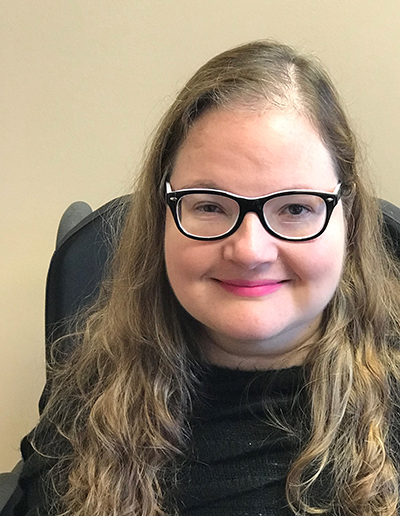
Olivia Babis is the Public Policy Analyst on the Public Policy Team and helps track and analyze relevant legislation, as well as prepare and present legislative testimony among other duties. Olivia joined DRF in February 2019 and has a B.A. in History and Political Science from the University of Memphis and is pursuing an M.A. in Disability Studies from City University of New York.
Please do not leave requests for assistance in the comments. Blog comments are not monitored by intake staff and your request may not be seen. Visit our Online Intake Page to request our services.
Commenting is not available in this channel entry.Get clear, reliable updates on the issues that affect people with disabilities—without the noise or jargon. We’ll share practical information, important changes, and real stories that show how advocacy is making a difference. You’ll also learn simple ways to stay informed, get involved, and help drive meaningful change.
We care about your privacy and trust, and will never share or sell your email address.
Comments
Terrific read…very well written, informative, and compelling.
Many kids who envision they will grow up to be superheroes never do reach their dreams. But you did become a superhero… I look up to you as a shining example of a beautiful human being, and I am super impressed with the people you’ve helped, and the work you continue doing. Way to go!
By Suzy on Jul 23, 2020
I have a severe traumatic brain injury.
I worked at the Florida Court in Broward County for 4 years. I received my raises , and made changes in the archives that actually had my supervisor give me a kiss and hug for making her job so much easier.
I was also thanked by my co- employees for making there jobs so much easier. These are from decisions I created by myself. I won unemployment even though my employer fired me because I had a seizure and said I was dangerous. I had many seizures in my employment there, so it was known I am far from dangerous. This was one of many issue that was used against me. I even was written up for coming to work late , because my wife and I lost a baby that morning. I did go to work because my wife wanted to be alone. I also felt comfortable around my friends in the court. I was sent by my supervisor, Debbie Hitchcock, to a 4 day seminar in Miami that was supposed to be about court records. It turned out that the seminar was for prisoners records in the jails and prisons. It had no connections to the work I had in the court archives. After the seminar I chose to go up to the lecturer and tell him of my work in the court. He has a family member who has the same disability that I have and couldn’t believe that I wasn’t receiving any help with questions I would possibly have at the court. I was being to have write ups do to these simple questions. I cared his information with my supervisor to let her know of the help that was offered to both of us. She took his name and private cell phone number away from me, and said I don’t have to call him, that is why she is here as my supervisor. This was to continue the write ups that could have been handled in a 1 or 2 minute phone call. These questions were nothing more than anyone else would need. They were never a more than a couple a week and I probably have proof to this if it would show I was a good employee.I was told that Human Resources had no information about my STBI. It was later proven that it was submitted .I was personally hired by the Clerk, Mr. Howard Forman who was fully aware of my brain injury and the needs of STBI.
I have no legal help, or knowledge of disability employment Civil Rights, nor the ability to understand legal information. I was completing my work with minor questions that was far from a problem of the court proceeding as needed.
Any information you would need will be supplied.
Thank You,
Glen Meiselman
561-789-3364
.(JavaScript must be enabled to view this email address)
By Glen Meiselman on Dec 21, 2021
Hi Glen, give us a call at 800-342-0823 or use our online intake at disabilityrightsflorida.org/intake. An advocacy specialist will discuss your issues with you and determine if we can assist. And if we cannot, we’ll point you in the right direction.
By Disability Rights Florida on Dec 29, 2021