National Women and Girls HIV/AIDS Awareness Month
Wednesday, March 23, 2022
Wednesday, March 23, 2022
As we move through the month of March, we want to address the impact of HIV/AIDS on women and girls. We’re joining others across the nation in raising awareness around women who are affected by this epidemic. HIV/AIDS was first reported 40 years ago, but with the right precautions and education, it does not have to continue for 40 more.
In recent years, the rates of HIV among the female population in the U.S. have declined, but nearly 7,000 women received an HIV diagnosis in the United States and dependent areas in 2019. It is important to recognize the women and girls who are impacted by HIV and to provide resources and education on the topic, because all people deserve to be healthy. If individuals aren’t aware of the risks of HIV or the tests available to them, they can’t get the care and treatment they need to stay healthy. HIV itself is dangerous to women and girls, but the negative attitudes, beliefs, and behaviors towards females with HIV can be harmful as well. In reality, anyone can be affected by HIV, and this diagnosis is nothing to be ashamed of.
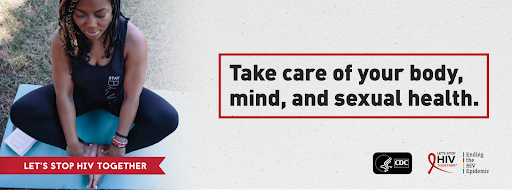
Image Description: Photo of a woman outside with black skin and wearing black clothes in a sitting down yoga position with her eyes closed. A small red banner on the bottom right reads “let’s stop HIV together”. On the right in the center, there is a red outline of a box with large black text that reads “Take care of your body, mind, and sexual health.”In the bottom right corner there are logos for the CDC, the Let’s Stop HIV Together Campaign, and the Ending the HIV Epidemic Initiative.”
A powerful initiative that opens up conversations, resources, and information about HIV is called Ending the HIV Epidemic. Through this, the Let's Stop HIV Together initiative has expanded efforts in providing helpful information on HIV prevention, testing, treatment, and stigmas.
Another great resource is the CDC's YouTube Channel Playlist about HIV/AIDS. Check out the playlist to learn more about HIV, hear from people living with HIV, recovery, treatment, and more.
We want to encourage women and girls to be able to open up about their experiences, emotions, and thoughts about HIV. This means that communities must be willing to break any existing negative stereotypes or ideas around this condition. Our goal is to work towards being a society that does not stigmatize HIV in women and girls.
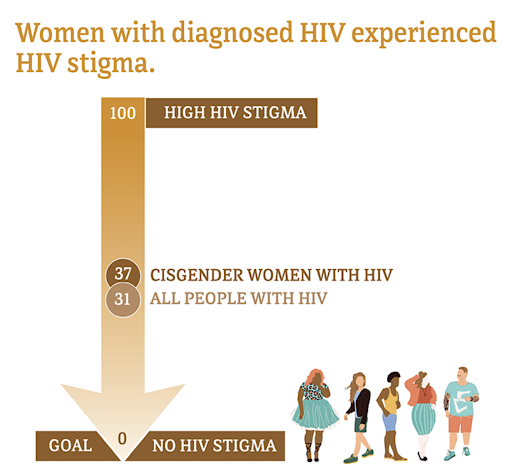
Image description: A graphic with a white background and symbols in brown tones has a title that reads “Women with diagnosed HIV experienced HIV stigma”. At the top of the downward facing arrow there is the number 100 with a box next to it which says “high HIV stigma”. At the bottom of the arrow there is a number 0 with text reading “goal - no HIV stigma”. More than halfway down on the arrow there are two brown circles which read 37, with adjacent text that says “cisgender women with HIV” and 31, with adjacent text that reads “all people with HIV”. On the bottom right corner there are 5 animated graphics that display a diverse set of people.
While experts across the country are working to end this epidemic, we must do our part to learn the facts! The Center for Disease Control and Prevention (CDC) helps us understand The Relationship Between Women and HIV. Here are some factors that increase the risks of HIV for women:
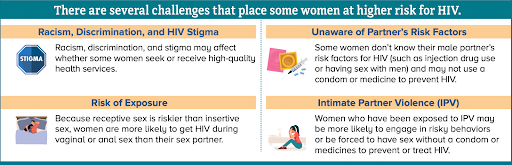
Image Description: A chart has a teal title bar that reads, “There are several challenges that place some women at higher risk for HIV”. Then there are four boxes with yellow sub-heading bars and blue text. The top left box title says “Racism, discrimination, and HIV stigma” with text below in black reading “Racism, discrimination, and stigma may affect whether some women seek or receive high quality health services”. An image next to the text is in the shape of a stop sign in two shades of blue and reads “stigma”. On the bottom left the title bar reads “risk of exposure” with text below in black that says “Because receptive sex is riskier than insertive sex, women are more likely to get HIV during vaginal or anal sex than their sex partner”. Next to this text there is an animated graphic of a man and a woman laying in a bed. On the top right, the title is “Unaware of partner’s risk factors” with black text below reading “Some women don’t know their male partner’s risk factors for HIV (such as injective drug use of having sex with men) and may not use a dondom or medicine to prevent HIV.” An image to the left of this text shows animated pills, a needle and a condom. The lower right box has a title that sways “Intimate partner violence (IPV)” with black text reading “Women who have been exposed to IPV may be more likely to engage in risky behaviors or be forced to have sex without a condom or medicines to prevent or treat HIV”. An associated symbol shows an animated girl sitting on the ground with her face in her hands.
For anyone, it is crucial to know how you may be at risk, and how to minimize these risks! When women and girls talk to their physicians, they may ask about PrEP (Preexposure Prophylaxis) which can be prescribed by a doctor to help protect someone from getting HIV. As it stands, only 10% of women in the U.S. who might benefit from PrEP were being prescribed it as of 2019 . This is why we must shed light on the women and girls whose experiences with HIV have not been recognized, so that they have more options and control over their lives! We know that there are challenges in prevention if someone does not know they have it, if they don’t know their sex partner’s risk factors, if they have mental health disorders, if they don’t know the treatments available, and so on. This is why we want to encourage you to take a few moments this month, and evaluate your own risks and courses of action moving forward.
A way to be proactive is to just ask yourself: do I know my HIV status? You can use available tools to search and find HIV prevention services near you. This tool can allow you to find places for HIV testing which is a great step towards staying healthy. There are flexible options available for testing, including free HIV self- tests:
We want women and girls to feel empowered, and this begins with putting the power in your own hands. You can be your own advocate when it comes to preventing, or living with HIV. If you learn your status and you are diagnosed with HIV, you can seek out treatments that can suppress the risk of transmission to others. Talking with your doctor is the best way to find out which medicines to help treat HIV might be right for you.
Participate with us in national girls and women HIV/AIDS awareness month by becoming educated and empowered. Then, help educate and empower the women and girls in your lives!
Please do not leave requests for assistance in the comments. Blog comments are not monitored by intake staff and your request may not be seen. Visit our Online Intake Page to request our services.
Commenting is not available in this channel entry.Get clear, reliable updates on the issues that affect people with disabilities—without the noise or jargon. We’ll share practical information, important changes, and real stories that show how advocacy is making a difference. You’ll also learn simple ways to stay informed, get involved, and help drive meaningful change.
We care about your privacy and trust, and will never share or sell your email address.
Comments