Spotlight on Men’s Mental Health
Wednesday, June 16, 2021

Wednesday, June 16, 2021
In observation of Men’s Health Month this June, Disability Rights Florida would like to bring awareness to common barriers that many men must overcome to access appropriate care for their mental health needs. Of the many barriers that men deal with, gender roles, accessibility, and cultural influences are among the most common. Dr. Willie L. Williams, DrPH, MSW, is a youth program director, educator, and author who draws from his professional and personal experiences to shed light on these barriers that men face when accessing mental health care. He was kind enough to share his expertise in an interview with me on May 22, 2021.
According to Dr. Williams, perceived gender roles can pose a barrier to men seeking mental health care, because historically, many men have been told that their role as “man of the house” requires them not to cry or show emotion, and to not ask for help when needed. For this reason, a community’s view of male gender roles may pose a barrier to seeking appropriate treatment because men are more likely to seek help if their community and their family support them. As further explained by Dr. Williams, cultural influences can increase the impact of this barrier.
A recent study conducted by the World Health Organization (WHO) echoed Dr. Williams’ concerns about the impact of gender-based stigma on men seeking mental health care and found that it exists internationally across cultures. WHO researchers conducted a review of literature written on gender studies and men’s health and concluded that “[t]he evidence overwhelmingly showed that traditional masculinity norms stigmatize help-seeking for mental health problems and limit men’s knowledge and capability concerning mental health.” While these masculinity “norms vary and operate differently according to individual, interpersonal, community and societal contexts” and the ”stigma concerning mental health issues is increasingly being debated and challenged in many countries, it remains a powerful deterrent to help-seeking for men.”
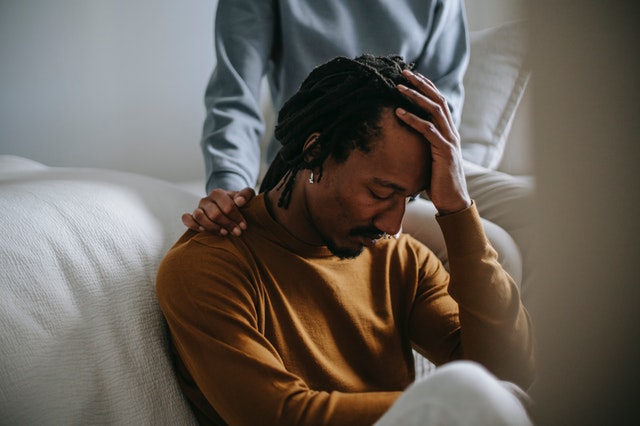
Men may also have difficulties accessing mental health care due to lack of education on mental health and mental illness in their communities. Dr. Williams shared that often men may not recognize or understand the symptoms of mental illness. The perception of mental health and mental illness varies depending on their culture and upbringing. These things can make it difficult for men to describe how they feel and think. Men who are unable to effectively communicate and articulate emotions often have difficulty finding an audience that will listen, leading to continued suppression and ultimately denial. Those men who are willing to open up and seek help could still have a very hard time speaking with a mental health professional because they may have trust issues. Some men feel uncomfortable expressing their emotions and being vulnerable with a mental health professional who does not look like them. All of these things can contribute to symptoms of mental illness being left untreated, misdiagnosed, or incorrectly labeled as something they’re not, such as a lack of initiative, demotivation, slothfulness, and weakness in character.
Dr. Williams also highlighted how finances can impact the accessibility of professional mental health care for any man, but those with responsibilities such as a household or family may be especially reluctant to spend family resources on taking care of themselves. Lack of insurance or limited insurance coverage may cause men to pay out of pocket for care. This can strain a family’s budget, causing some men to forfeit their mental wellness for a false sense of provision. Men often view taking care of their mental health as not crucial to providing for their family.
Finally, Dr. Williams explained that cultural influences or bias can create layers of distance to becoming mentally healthy by making men ashamed of being pegged as “crazy.” Around the world, religious beliefs often take precedence and can create distrust of medical and mental health professions. Men are often told to pray or meditate about their mental health wellness. Although religion and prayer can be beneficial to wellness, it is not always an effective substitute for quality care from a mental health professional when needed. Churches and religious leaders however are making great strides to encourage people to seek help when needed.
Dr. Williams also mentioned race as having a very important impact on how a man and his community view mental health. For example, in a 2007 study approximately 63% of African Americans viewed depression as a “personal weakness,” 30% reported that they would deal with depression themselves, and only one-third reported that they would accept medication for depression if prescribed by a medical professional. A report called Racial/Ethnic Differences in Mental Health Service Use Among Adults by the Substance Abuse and Mental Health Services Administration (SAMHSA) demonstrates how individuals of different races/ethnicities with various diagnoses of mental illness engage with treatment in the United States. Interestingly, the SAMSHA study found that most men engaged with mental health treatment much less frequently than women, regardless of their race or ethnicity, except for American Indian or Alaska Native men who used more mental health services than women.
In closing, while the narrative surrounding mental health has progressed to include more acceptance and positivity, there is still a way to go when it comes to men’s mental health. During Men’s Health Month, I would encourage you to check on your fathers, sons, brothers, uncles, cousins, and friends. Do not let them suffer in silence another second. Make yourself available to listen even when they do not have the words. Inform yourself on the common signs and symptoms of mental illness. Pay attention and support them in seeking help. Our men are counting on us. Let us be the community that changes the game.
If you would like to request service or information from Disability Rights Florida, please contact our Frontline Intake and Referral Service (FIRST) team Toll-Free at (800) 342-0823 / TDD (800) 346-4127, or you can complete an online intake.
If you are experiencing a crisis related to mental illness and require immediate assistance, please call the National Suicide Prevention Lifeline at 1-800-273-TALK (8255) or Text HOME to 741741 to connect with a trained crisis counselor 24/7.
Thank you for reading! If you enjoyed this post, please take a few more minutes to complete our annual Public Input Planning Survey to help Disability Rights Florida develop more information and resources that matter to you.
 Trinika Trotter is an Advocate-Investigator on the Investigations Team with a focus on violation of rights, abuse, and neglect complaints throughout facilities in Central Florida. She also assists on the Institutional Intake Line and monitoring projects. Trinika joined DRF in February 2019 and has an MSW from Florida A&M University.
Please do not leave requests for assistance in the comments. Blog comments are not monitored by intake staff and your request may not be seen. Visit our Online Intake Page to request our services.
Commenting is not available in this channel entry.Get clear, reliable updates on the issues that affect people with disabilities—without the noise or jargon. We’ll share practical information, important changes, and real stories that show how advocacy is making a difference. You’ll also learn simple ways to stay informed, get involved, and help drive meaningful change.
We care about your privacy and trust, and will never share or sell your email address.
Comments
Workers Compensation is abusing their powers and this leads over to where Social Security follows by putting people on SSI when they should be on SSDI where their isn’t a,$2000 limit where Social Security says they over paid you I am fighting this now in Tallahassee FL with Judge Andrews 111
By Douglas Mathis on Jun 25, 2021