Usability for some…or for all?
Wednesday, November 10, 2021

Wednesday, November 10, 2021
November 11th is World Usability Day, an annual event intended to highlight the importance of technology as a way to help make our lives easier. Devices like cellphones, laptops, tablets, and public access kiosks — and the websites, applications and interfaces that run on these devices — have the potential to remove barriers, open up opportunities, and advance inclusion for people with disabilities.
There are many wonderful examples of successful technology. But there can also be problems with so many of the technologies we’re expected to use. Many of these problems are associated with poor usability. Poor usability is characterized by:
A technology may offer all the functionality you need (and more!). But a lack of usability means it’s likely to be frustrating and inefficient for you to access that functionality. And in many cases, that lack of usability is due to accessibility barriers that limit or prevent access to people with vision, hearing, physical or cognitive disabilities.
So what can technology creators do to improve a product’s usability? For a start, there are principles and guidelines for usable technology design that a thoughtful designer can apply to their designs, such as the Principles of Universal Design. There are accessibility standards like the W3C Web Content Accessibility Guidelines that technology development teams can follow to ensure they avoid introducing accessibility barriers that might affect users with disabilities. These resources provide helpful guidance once a technology product team knows what path it’s on. But the limit of these standards and guidelines is that they don’t tell you whether the solution you’re building is the right one for your users’ needs.
At the recent ASSETS 2021 conference on accessibility and technology research, keynote speaker Professor Annalu Waller talked about her work over many years researching augmented and assistive communication (AAC) technology. She noted how often the intended users of AAC technology — people with communication disabilities, and often with other disabilities too — were not meaningfully involved in its design or development. Even when AAC practitioners and technologists were in the design team, the consequence was AAC technology that fails to meet the needs of its users. By contrast, Professor Waller found that when intended users of AAC are effectively involved in the design process, the result is AAC that users find more usable.
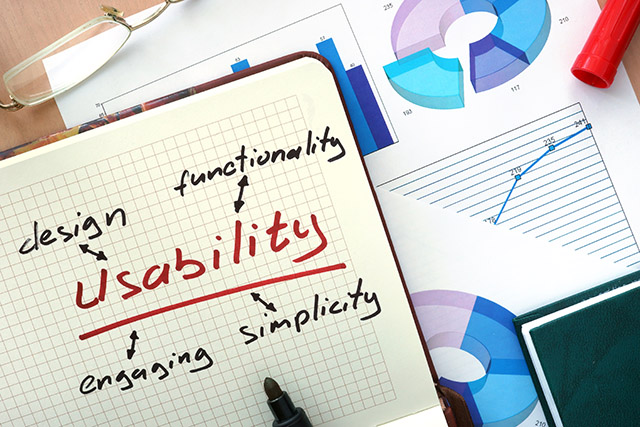
So if we want more usable technology, a great first step is to think about the problem the technology is intended to solve from the perspective of the intended users of the technology. Many issues arise when a technology design and development team make assumptions on what users need, based on their own experiences and preferences. In some cases, those assumptions might be reasonably accurate. But unfortunately, a highly tech-literate product team is likely to overestimate a user’s prior skills, knowledge and patience.
The best way to think about the problem from the intended users’ perspective is to involve those users in the design and development process, through an approach known as user-centred design. And that starts even before anything has been designed, with upfront research. Teams planning on building a new technology, or a new version of an existing technology, may have ideas about what it should do or look like. But asking people about how they currently perform tasks, what problems they experience, and what they do to get around those problems helps the team understand the problem from the user’s perspective. It helps them identify the most important problems as well as what currently works well.
Then, with a richer understanding of the problems that a new technology needs to address, the team can start the process of designing a solution. And here, again, involving users can help — by testing ideas and helping the team identify the best ideas and throw out those ideas that don’t work. Even better is when users act as co-designers, working with the team to come up with ideas.
This process continues into developing a working technology. Regular usability evaluations, where potential users are observed using the technology to try to complete a key task, help product teams identify problems and address them before it’s too late. This regular focus on evaluation significantly reduces the chances that the final product will be shipped with usability issues present.
The value of a user-centred design process is widely recognized by organizations that produce technology. But how often are people with disabilities included in activities? Not often enough, in my experience. It’s unfortunately easy for organizations doing user-centred design to forget about people with disabilities in their definition of “user.” Or, maybe they are thinking about people with disabilities, but only as people who benefit from accessibility features of the product, not the product as a whole.
That’s why any organization that practices user-centred design needs to make sure that its definition of “user” includes people with disabilities. And their involvement should be in any activity that seeks input from users, not only activities that focus on exploring an accessibility-related design question (although engaging people with disabilities to explore effective ways to provide accessibility solutions is still worthwhile).
Inclusive user-centred design means making a conscious effort to include people with disabilities whenever any form of user involvement takes place. This includes paying attention to recruitment methods to ensure that any activity that seeks user input includes representation from people with disabilities. It means making sure that activities involving users are designed in an inclusive way, so that people with disabilities can participate in an equal way to other participants. It means committing to ensuring that accessibility and usability for people with disabilities is a core requirement for any technology before it’s launched. Building usability and user experience capacity to effectively include people with disabilities is an activity my organization, TPGi, loves to help our clients with—it’s a clear sign of commitment to people in the technology design process.
Tim Brown, chair of global design agency IDEO, wrote, “By concentrating solely on the bulge at the center of the bell curve we are more likely to confirm what we already know than learn something new and surprising.” Involving people with disabilities in the design process can help technology product teams learn something new and surprising, and use that knowledge to create technologies with fewer usability problems that more people can use and enjoy.

Please do not leave requests for assistance in the comments. Blog comments are not monitored by intake staff and your request may not be seen. Visit our Online Intake Page to request our services.
Commenting is not available in this channel entry.Get clear, reliable updates on the issues that affect people with disabilities—without the noise or jargon. We’ll share practical information, important changes, and real stories that show how advocacy is making a difference. You’ll also learn simple ways to stay informed, get involved, and help drive meaningful change.
We care about your privacy and trust, and will never share or sell your email address.
Comments