“Neurotypical passing” ignores my difficulties, as well as the amazing parts of being autistic.
Friday, April 01, 2022
Friday, April 01, 2022
April 2nd is World Autism Awareness Day. As we honor and center folks with autism and their experiences today, we want to highlight the concept of 'neurotypical passing' and how this concept has impacted the autistic community. Today, we have the permission to share an article written by Charli Clement from the Conscious Being magazine.
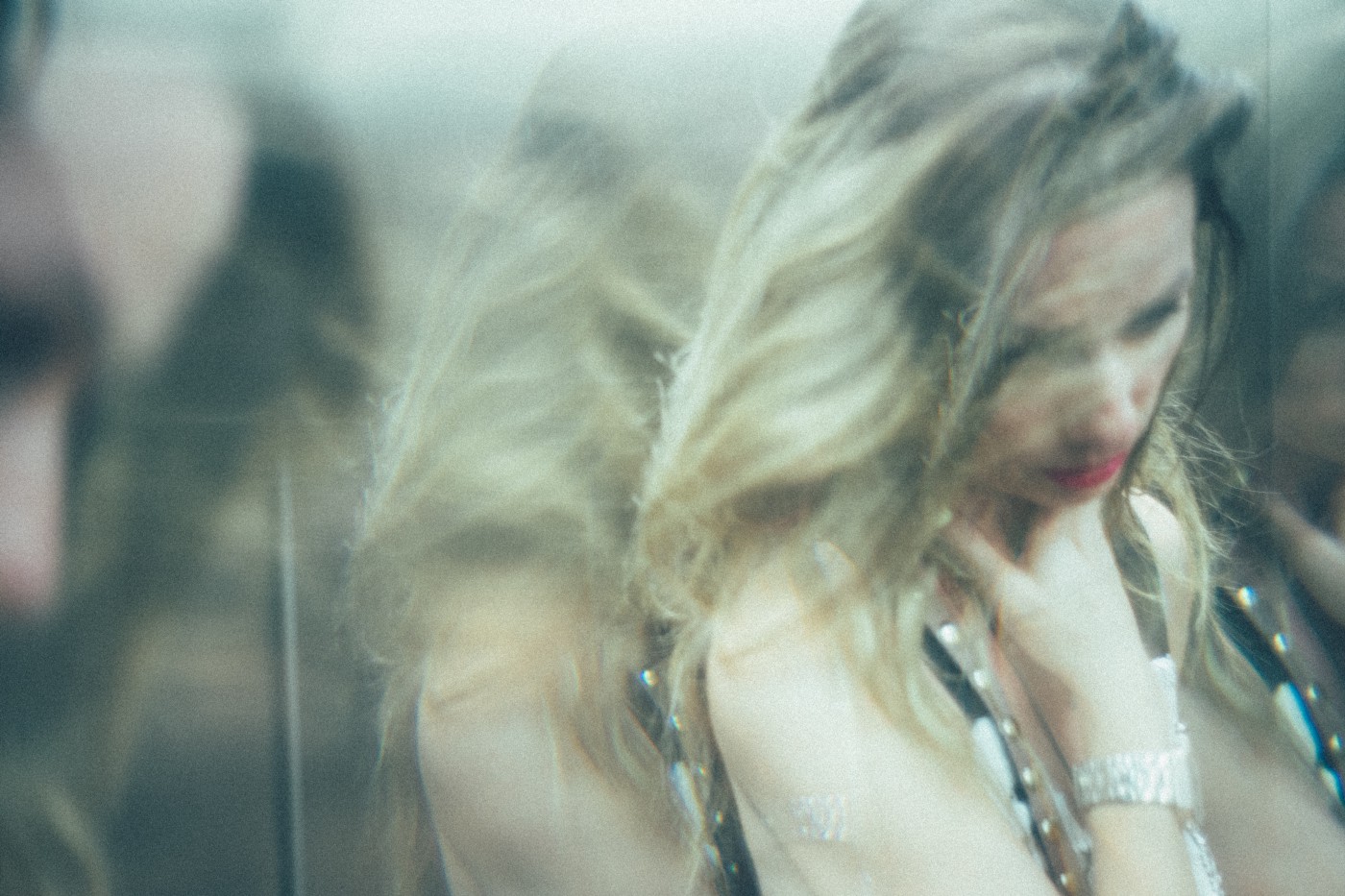
A blonde woman looks down, her hand at her throat. She is wearing red lipstick and a silver watch. The image is refracted, so you see two impressions of the woman.
As an autistic person who, like many others in the community, is completely against the use of functioning levels being ascribed to us, I was intrigued when I first heard the term “neurotypical passing” on TikTok and later, Twitter. At first glance, I thought it might be a much better term for me, but on further interrogation, I realised that it simply repackages functioning labels, ignoring all the difficulties I have and the accommodations I need.
“Neurotypical passing” has been used to describe neurodivergent people who can ‘appear’ neurotypical, which I draw several issues with. The first of these is that masking — when autistic people camouflage their behaviours and traits to fit in, often as a self-preservation technique — is an often painful and repressive process. Masking for hours on end at school, at work or around extended family, for example, can mean that a lot of time afterwards is spent recovering. It’s been described by some as the ‘pop bottle effect’: neurodivergent people masking or suppressing their traits all day, and then ‘exploding’ (having a meltdown, shutdown or panic attack, for example) when they get home.
Does that translate to a privilege? I can understand why this is an argument being made. It could mean we are more likely than others to get through education or be employed, but it’s not a privilege to have to endure emotional and physical pain just to fit in — it’s still ableism and it’s still oppressing us. That’s because we are forcing ourselves to fit into a society, instead of society working to remove the barriers that make it necessary to mask to start with. It’s important to refer here to the social model of disability, which says we’re not disabled by our conditions themselves, but instead by society’s lack of adjustments.
This is a shorthand for ‘self-stimulating behaviours’, which are often repetitive movements or sounds. Although it’s often used when anxious or overwhelmed, sometimes it’s just a way to support our processing. My stims include using tangles, rocking back and forth and singing, amongst many others. I’m a ‘sensory seeker’ as well as sensitive to some stimuli, so my stimming can be extremely variable. This is something I need to do most of the time, but I am often forced to suppress myself. This might make me pass as neurotypical, but it harms me.
I also cannot pass as neurotypical or allistic (non-autistic) all the time. Moments where I am unable to do so include: when I am having a meltdown due to sensory overwhelm; when I have periods of physically not being able to speak; the times when my executive dysfunction means I don’t drink any water for eight hours at a time; or when I pass out in the summer because temperature dysregulation is an awful combination mixed with a tachycardia condition.
Even when I can pass as neurotypical in terms of my personality or ability to mask anxieties, I still need accommodations, and the aforementioned term at best ignores this fact, and at worst would discourage us to ask for these needs. For me in the pandemic, this has included captioning for auditory processing issues, but it also means having access breaks, having a separate room to go to if I feel overwhelmed, and makes me need quite specific exam arrangements too. In some instances, it has felt as if I will be an inconvenience, as up until a certain point I have appeared to “pass” and not need anything. I will then just stop asking for my access needs, which is extremely damaging.
It also seems that the term is generally only applied to autistic people and those with ADHD, rather than to the wider spectrum of neurodiversity, which is problematic in itself. It implies that other neurodiverse conditions — such as dyspraxia or dyslexia — are less likely to impact people to a level that they would ever not appear neurotypical. This enforces the misnomer that autism and ADHD are the only neurodiverse conditions. It also compresses the varying issues that different conditions face into one homogenous group.
The term also ignores the concept of intersectionality across other identities, because people already believe that certain groups ‘don’t look autistic’ regardless of masking or anything they struggle with. This ranges from women and marginalised genders who are severely underdiagnosed, to people of colour who aren’t often represented in spaces about neurodiversity. So it has to be questioned — does using this label take us back in how we perceive autism and neurodiversity as only one type of person?
And perhaps, ‘neurotypical passing’ doesn’t just ignore my difficulties, but the traits my autism gives me that make me so proud to be autistic: my decision-making skills, how logical I am, my integrity and honesty, my passion for social justice. Maybe I don’t want to be neurotypical passing. From diagnosis, I spent my secondary education desperately hiding it, but that came back to bullying and a lack of recognition once more. I wouldn’t want a cure for my autism; I just want society to adapt itself. So why would I want to pass as neurotypical?
It’s exhausting. It makes me feel like I shouldn’t ask for help, and fundamentally, it takes a lot of the personality that I am so proud of away from me. The use of ‘neurotypical passing’ as a repackaged version of ‘high-functioning’ is not progress for autistic and otherwise neurodivergent people. It allows for neurotypicals to use it as a way to ignore our needs and the difficulties that can come with our conditions. It means society doesn’t have to move our barriers because it says that we can simply cope with them. Whilst I may not look autistic all the time, the impact that masking has is extremely detrimental. I simply can’t agree with a term that reduces that down to make neurotypicals more comfortable.
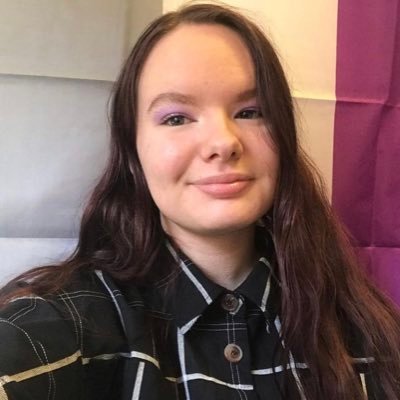 Charli Clement is an autistic, dyspraxic and chronically ill activist who writes and speaks about a variety of topics including disability, asexuality, mental health, education and politics. She has previously written for the Metro and VICE, and in 2019 became a national #iwill Ambassador for youth social action.
She can be found on Twitter and Instagram and on her blog, Charli Clement Writes.
Please do not leave requests for assistance in the comments. Blog comments are not monitored by intake staff and your request may not be seen. Visit our Online Intake Page to request our services.
Commenting is not available in this channel entry.Get clear, reliable updates on the issues that affect people with disabilities—without the noise or jargon. We’ll share practical information, important changes, and real stories that show how advocacy is making a difference. You’ll also learn simple ways to stay informed, get involved, and help drive meaningful change.
We care about your privacy and trust, and will never share or sell your email address.
Comments