Publications
2024 Annual Report
Since 1977, Disability Rights Florida (DRF) has worked tirelessly to advocate for and protect the rights of children and adults with disabilities. Our mission is to ensure that they can live as they choose, free from abuse, neglect, and discrimination. Over the years, we have seen progress, but Fiscal Year 2024 reminds us there is still much to do.
This year, our dedicated legal teams took on 1,464 new cases addressing critical rights violations. These cases tackled challenges such as access to effective communication, home and community-based services, mental health support, free and appropriate public education, supported decision-making, and more. Beyond individual advocacy, we also drove systemic reforms affecting thousands of Floridians with disabilities. This included addressing the misuse of the Baker Act against students in several counties, opposing harmful proposed changes to the Developmental Disabilities Individual Budgeting (iBudget) Waiver, and advocating for individuals with disabilities in the Department of Corrections Inpatient Units who endured severe mistreatment and neglect.
Our advocacy also extended to empowering people with disabilities during the 2024 election cycle. DRF distributed thousands of materials to disabled residents of Florida nursing homes, assisted living facilities, group homes, and our partners providing vital services to people with disabilities, ensuring voters with disabilities understood their rights and available voting options. In addition, our Public Policy Team conducted accessibility audits of county election websites for all 67 counties and worked with local supervisors of elections to encourage improvements. And we increased outreach efforts by nearly 50% to rural and underserved communities, expanding our education efforts in vulnerable populations.
As you explore this annual report, we hope you see the dedication of our staff, Board of Directors, and PAIMI Advisory Council in action. Together, we remain steadfast in our vision of an inclusive world—one that provides equal opportunities for individuals with disabilities to participate fully in a society rooted in equity, dignity, and respect.
With gratitude,
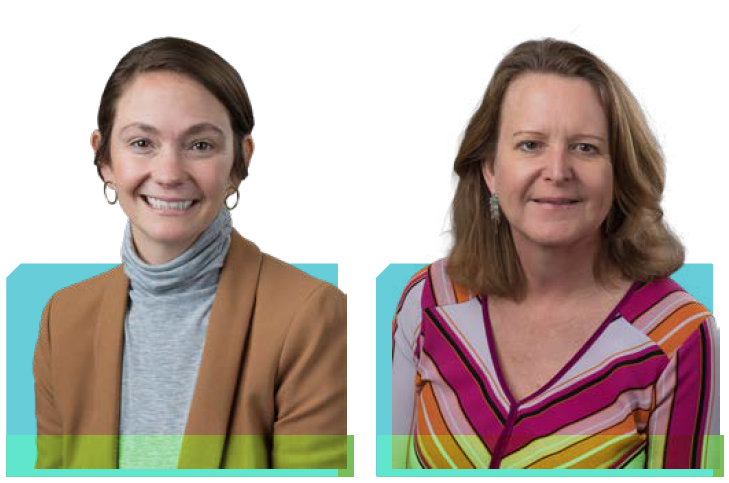
Katherine DeBriere
Board Chair
Cherie Hall
Executive Director
This year’s annual report features the painting “The Light House” by Scott McDaniel

Scott McDaniel is laid back and inquisitive. He loves listening to music while creating art and is often seen wearing his favorite 90’s style earphones. He is curious about the process of making art and is always eager to experiment with new techniques and materials. His work is energetic, bold, and reflects his unique perspective and ranges through a variety of subjects from animals to architecture to abstract designs.
Protecting Service Animal Owners’ Rights
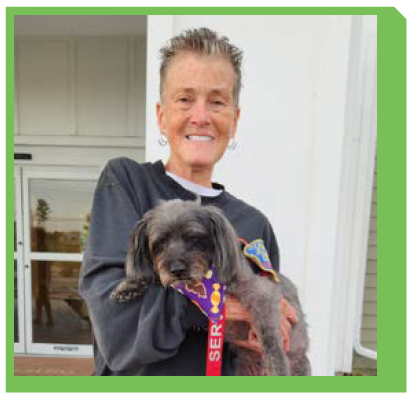
Bobbi is an adult with diabetes and physical impairments who uses a trained service dog. Her diabetic-alert dog, Auggie, jumps and barks at Bobbi when there are changes in her blood sugar levels. He also wakes her if her blood sugar alarm goes off while she sleeps and she cannot hear it. One day, while Bobbi was walking Auggie inside her apartment building, the apartment manager asked Bobbi to pick up her dog and told her that dogs were not allowed to walk inside the building. Bobbi informed her that Auggie is a diabetic-alert dog and requires the ability to jump to alert her. However, the manager told Bobbi that she must carry Auggie or use a dog stroller indoors, per the apartment management company’s policy. Bobbi tried to use a stroller, but Auggie had difficulty jumping out to alert her about her blood sugar level changes. This policy hindered Auggie from performing his job, putting Bobbi at risk. Our staff worked with Bobbi and requested a reasonable accommodation on Bobbi’s behalf, seeking permission to walk her service animal inside the complex regardless of rules to the contrary. Management approved the accommodation request, and Bobbi can now use her service animal without interference.
Staff Advocacy Secures Student’s Support Needs
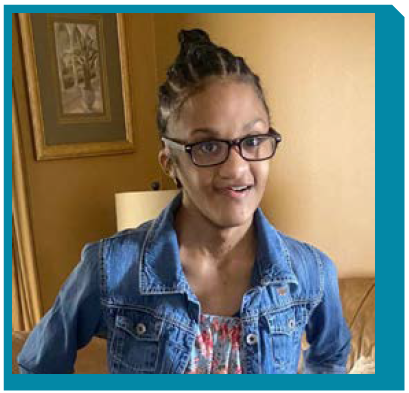 Christina is a student who is deaf/hard of hearing (DHH) and has other disabilities that cause challenging behaviors. She attends high school with a DHH program. Christina’s parent contacted Disability Rights Florida because Christina’s school claimed they could not meet her needs for a one-to-one paraprofessional and were going to place Christina in a more restrictive environment. However, this new setting would not have DHH instruction, which is crucial to her learning.
After attending multiple IEP meetings, our staff successfully advocated for Christina to remain in her current placement with a deaf American Sign Language interpreter and a one-to-one paraprofessional. Christina will graduate from high school and attend a post-secondary transition program that teaches about daily living activities, building community relationships, and employment skills.
Advocating for Identification to Support Community Integration
Donnie, an adult with a mental health disability, reached out to Disability Rights Florida (DRF) for help obtaining a birth certificate and state identification card. Without these essential documents, Donnie faced barriers to leaving a mental health treatment facility and transitioning to a more independent life in the community. Donnie’s journey was not easy—he was uncertain of key details about his birth, which made obtaining these documents complicated.
Recognizing these challenges, DRF stepped in to help. Our team collaborated with facility staff, the Social Security Administration, and the Vital Records office to navigate the complex process. Through multiple conversations, DRF guided the facility on the steps needed to request his birth certificate. When progress stalled, DRF took the lead by gathering the necessary information to ensure Donnie could move forward.
In May 2024, DRF delivered Donnie’s birth certificate to him and worked with his case manager to ensure he obtained his state ID. With this empowering milestone achieved, Donnie now has the tools to begin a new chapter of independence and community integration. Disability Rights Florida is proud to have been part of Donnie’s journey, helping him overcome significant barriers and paving the way for his independence and community integration.
Safeguarding Students’ Food Safety
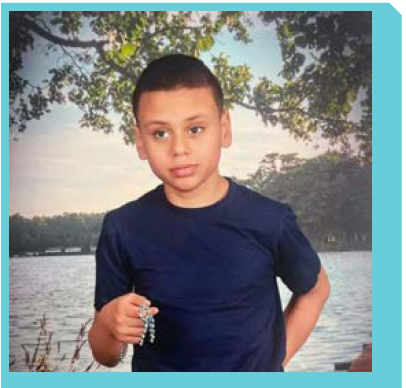 Zeijen Gonzalez-Carillo is a young student who is fed a specialized homemade blended diet through a gastronomy tube (G-tube) as part of his Individualized Education Program (IEP). His mother reached out to Disability Rights Florida because Zeijen’s school had stopped providing him with the homemade food. Due to negative health effects Ziejen had experienced from the alternative food formula proposed by the school, his mother had to keep him at home out of concern for his safety.
Denying Zeijen his necessary meals and IEP accommodations violated his right to a free and appropriate public education. Our staff met with Zeijen’s IEP team to explain that he had the right to his doctor-approved blended foods, but they pushed back. We filed a Due Process with the Department of Administrative Hearings, and after negotiations with the district, we reached a Settlement Agreement. The school District reversed its policy and restarted G-tube feedings for Zeijen and all other home-blended G-tube-fed students in the District.
During an interview with a Representative Payee (RP), our RP staff member was asked for guidance regarding a new beneficiary under the payee’s guardianship. The beneficiary, living with cerebral palsy and other developmental disabilities, had recently experienced the loss of their mother. At the time, the beneficiary was nonverbal, using an ill-fitting wheelchair, malnourished, and traumatized.
The RP staff member provided guidance, explaining the Agency for Persons with Disabilities Medicaid Waiver process and assisted with a crisis application. They also shared resources for re-evaluating the beneficiary’s need for a new wheelchair, assessment for assistive technology, and other services.
As a result of this intervention, the Representative Payee successfully secured residential placement for the beneficiary in a group home. In this supportive environment, the beneficiary has made remarkable progress. Their posture has improved with a properly fitting wheelchair, they are now able to communicate in small sentences, and they are attending school with the aid of assistive technology.
Representative Payee Program Overview
- Payee Interviews Completed: 292
- Beneficiary Appointments Completed: 1,320
- Legal Guardian Appointments Completed: 103
- Third Party Appointments Completed: 392
- Referrals Created: 333
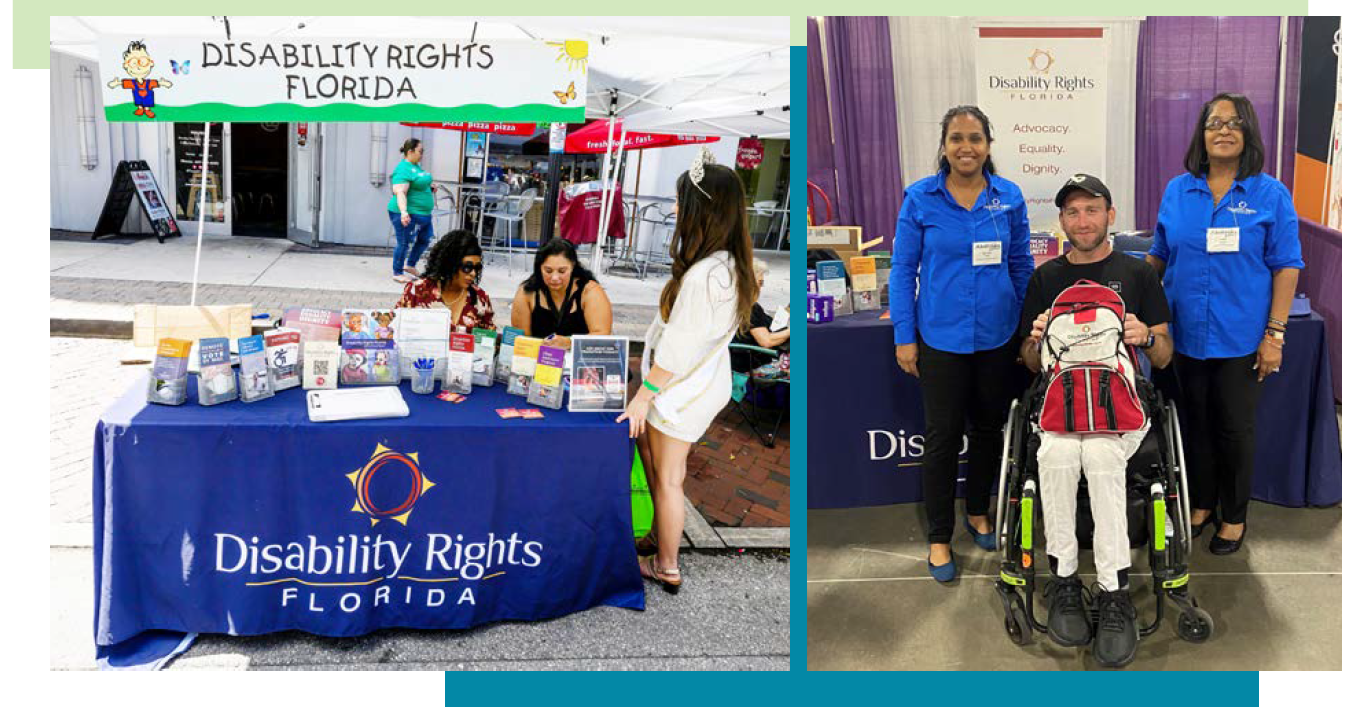
This year, our Communications and Outreach Team made significant strides to ensure multi-marginalized individuals with disabilities, particularly people of color and those in rural areas, know about our services and their rights.
Understanding the barriers these communities face with transportation, healthcare, and resources, we expanded our presence in underserved areas by 43%, reaching over 32,000 individuals through events and presentations. These efforts now represent nearly half of our outreach activities.
We also enhanced accessibility by:
- Providing materials in multiple languages,
- Participating in community support programs like food distribution, backpack giveaways, and health screenings.
By meeting people where they are, we’re breaking barriers, building trust, and creating opportunities for communities that need it most.
Lawsuit Improves Mental Health Care in Prison Inpatient Units
Disability Rights Florida (DRF), along with co-counsel from Florida Legal Services and the law firm Holland & Knight, filed a lawsuit against the Florida Department of Corrections (FDC) to ensure better mental health care for hundreds of individuals with significant mental illness housed in prison inpatient mental health units across the state. The case, which began in 2014 with an investigation into abuse, neglect, and deaths in these units, revealed severe mistreatment, extreme neglect, and the deaths of multiple residents. In 2016, DRF notified the FDC of its intent to sue but agreed to mediation before filing the case. Over the next year, with the guidance of a federal judge, both sides conducted extensive assessments of the mental health units, leading to a settlement agreement in late 2017.
The settlement, adopted as a federal court order in 2018, required the FDC to make major changes to its mental health care system over two years. These changes included providing individualized treatment, improving medication management, addressing the needs of high-risk patients, and training staff. Independent monitoring by the Correctional Medical Authority was put in place to ensure compliance with these requirements.
The monitoring process faced delays due to findings of non-compliance and the COVID-19 pandemic, which resulted in extended timelines. By 2024, the FDC achieved substantial compliance, leading to the end of court oversight on March 29, 2024. This case brought significant improvements in mental health care for individuals in these units, impacting thousands in need of inpatient treatment. Although the case has concluded, DRF remains committed to advocating for individuals needing inpatient care, as the FDC continues to be the state’s largest provider of inpatient mental health services.
Disability Rights Florida Celebrates Disability Voting Rights Week with New Resources and Unprecedented Mail-out
Disability Voting Rights Week (DVRW) is a nonpartisan movement hosted by the American Association of People with Disabilities and REV UP. Occurring from September 9 – 13, 2024, it is about advocacy, celebrating community, and building power.
The disability community makes up a significant voting bloc. Disabled voters are a part of every community. Yet, systemic barriers prevent many people with disabilities from accessing their right to vote. Throughout DVRW, disabled voters and disability advocates celebrated with voter registration and education events, candidate forums on disability issues, digital organizing, engaging with elected officials, and more.
Disability Rights Florida joined in these efforts by creating many new disability voting resources and partaking in an unprecedented mailout of voting information and materials to people living in assisted living facilities and nursing homes, along with our partners at disability organizations across the state, such as Centers for Independent Living, Arcs, Veteran Service officers, Lighthouses for the Blind, University Disability Resource Centers, and many more. In total, we sent 120,000 materials to increase disabled voters’ knowledge of their rights and what voting options are available to them. Included in the materials was our updated “Your Disability Voting Rights Brochure” and two “Know Your Rights” fact sheets on making voting access complaints and supervised facility voting.
New Florida Law Empowers Individuals with Disabilities Through Supported Decision-Making
Since Fiscal Year 2020-21, Disability Rights Florida (DRF) has worked closely with stakeholders and self-advocates to help policymakers understand the benefits of creating a supported decision-making (SDM) law. This law would be a less restrictive option than guardianship. DRF assisted in introducing SDM legislation in three state legislative sessions. We also met regularly with representatives from different sections of the Florida Bar to address concerns and explain how SDM can help people with disabilities in ways that guardianship does not always provide.
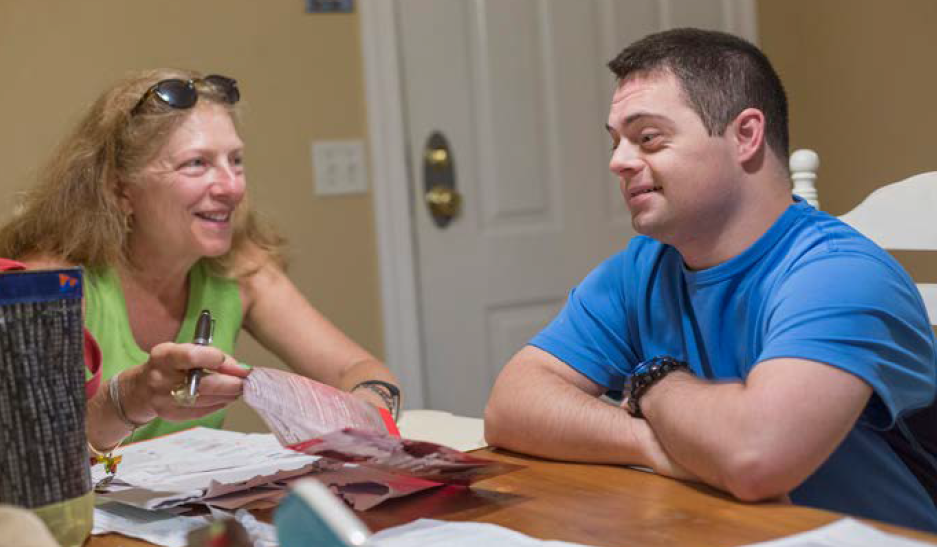 House Bill 73 passed unanimously in the 2024 state legislative session, with support from 23 sponsors and co-sponsors in the Florida House of Representatives. The Governor then signed it into law. This law officially includes the ideas of supported decision-making and SDM agreements. It also updates the rules for appointing guardian advocates for people with developmental disabilities. Now, courts must consider individual needs and abilities when deciding who will help with decision-making. Additionally, petitions and court orders must evaluate other options for guardian advocacy, including SDM.
The legislation changes the rules about determining if someone is incapacitated and about appointing guardians. It requires petitions to clearly state if the alleged incapacitated person uses any assistance (like supported decision-making) and explain why that help is not enough for them to exercise their rights. It also allows members of the examining committee to help facilitate communication between supporters and the person who may be incapacitated. Finally, it clarifies that capacity evaluations must consider whether the person can exercise any removed rights on their own or with appropriate help.
The bill also updates state education law to clearly say that SDM agreements allow students to give informed consent. This allows parents to keep participating in educational decisions. Starting in the upcoming fiscal year, DRF will monitor how the new law is implemented and used and its effectiveness. DRF will also work on outreach and education to encourage the law’s use.
Funding Breakdown
| Grant | Amount | Percentage |
|---|---|---|
| Assistive Technology – PAAT | $492,689 | 4% |
| Beneficiaries of Social Security - PABSS | $438,028 | 4% |
| Client Assistance Program - CAP | $1,021,860 | 9% |
| Developmental Disabilities - PADD | $1,617,886 | 14% |
| Individual Rights - PAIR | $1,504,045 | 13% |
| Individuals with Mental Illness - PAIMI | $2,301,819 | 20% |
| Traumatic Brain Injury - PATBI | $225,066 | 2% |
| Voting Access - PAVA | $367,696 | 3% |
| Social Security Rep Payee - SPSSB | $2,240,075 | 20% |
| Other Grants, Donations, and Program Income | $1,203,148 | 11% |
| Total Revenues and Support | $11,412,312 | 100% |
Program vs. General and Administrative
| Program Services | $9,876,529 | 88% |
| General and Administrative | $1,336,319 | 12% |
| Total Expenses | $11,212,839 | 100% |
New Cases by Region
- Northwest Region: 199
- Northeast Region: 238
- Central Region: 314
- Southwest Region: 278
- Southeast Region: 361
- Southern Region: 66
- Out of State: 8
New Cases by Topic Area
- Abuse and Neglect: 8%
- Access and Accessibility: 10%
- Benefits, Insurance, and Services: 11%
- Education: 18%
- Employment: 18%
- Healthcare: 5%
- Representative Payee Reviews: 22%
- Rights Protection: 8%
- Other: >1%
- Total New Cases: 1,464

Download the Report
- 2024 Annual Report (PDF) (original layout)
Other Publications and Previous Annual Reports
Visit our Publications page for a full list of downloadable publications we offer. If you want to order printed publications, please complete our Request Publication form.
Financial Information
Disability Rights Florida is a non-profit organization funded by a variety of sources. For a complete list of funders, visit our Programs and Funders page.