Extreme Heat

What is Extreme Heat? 

Extreme heat happens when there are two or more days in a row with high temperatures (90 degrees and above) and high humidity. 

Common Extreme Heat Terms:  

  • Heat Index: What the temperature actually “feels like.” This is measured by combining the air temperature with the humidity.  
  • Excessive Heat Outlook: Weather alert when there is potential for excessive heat within the next 3-7 days. 
  • Heat Advisory: Heat alert issued within 12 hours of dangerous heat conditions. Usually issued when temps will be 100 or higher for two or more days. 
  • Excessive Heat Watch: Heat alert issued when excessive heat is expected in the next 24 to 72 hours. 
  • Excessive Heat Warning: Heat alert issued when excessive heat conditions are expected within 12 hours. This Warning occurs when the heat index will be 105 or higher for at least two days and nighttime temps stay above 75.  

Extreme Heat is Dangerous 

There are many ways extreme heat endangers your health.  
  • Sunburn 
  • Dehydration 
    • Headache 
    • Confusion  
  • Heat cramps 
    • Muscle spasms 
    • Heavy sweating 
  • Heat exhaustion 
    • Heavy sweating 
    • Weakness 
    • High heart rate 
    • Skin is cold, pale and clammy 
    • Fainting, vomiting 
  • Heat stroke 
    • High body temperature (106+) 
    • Hot dry skin 
    • Possibly unconscious 

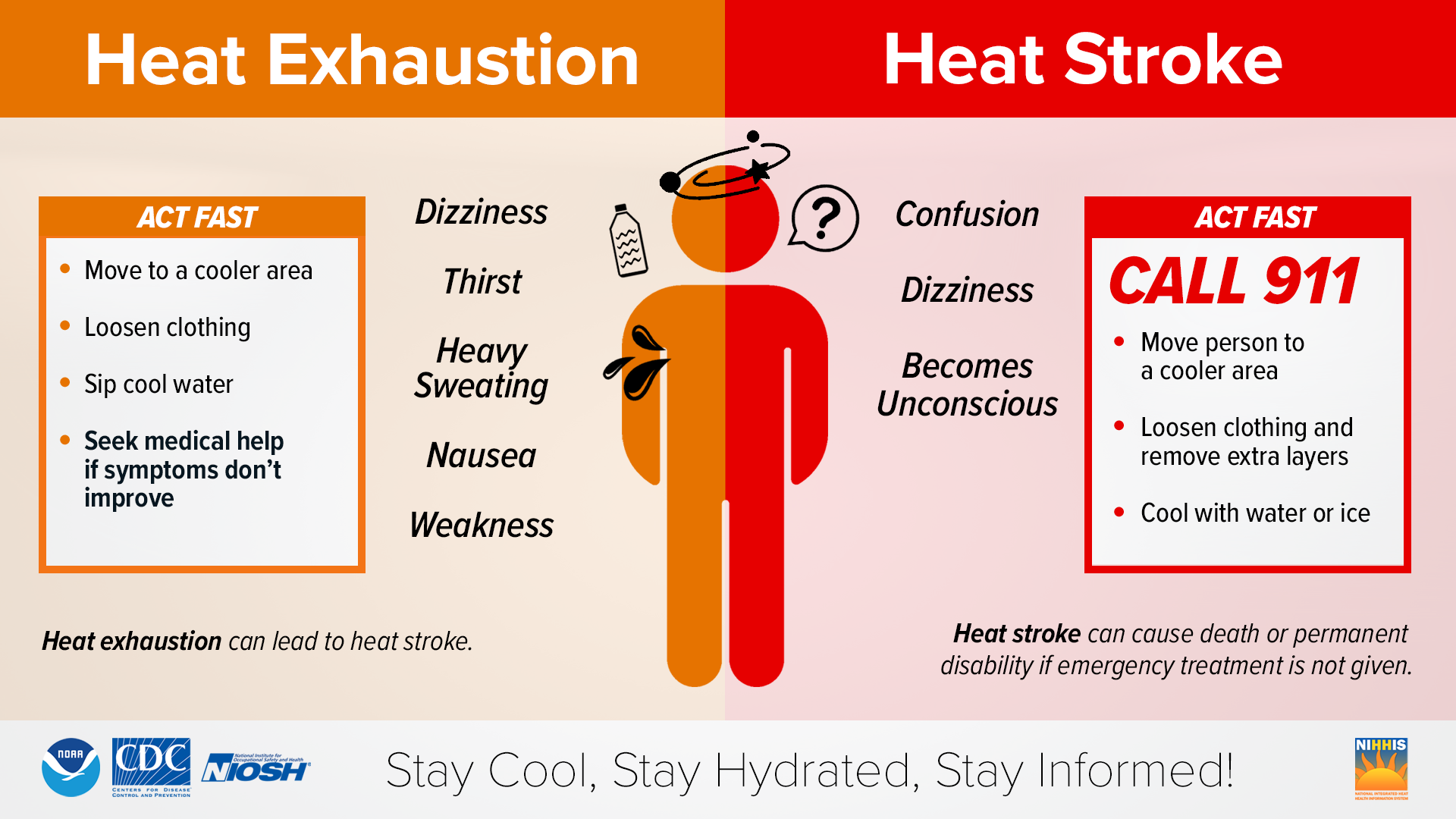
Infographic showing the difference between heat exhaustion and heat stroke symptoms and what to do. Heat exhaustion symptoms.  Dizziness. thirst. Heavy sweating. nausea. weakness. What to do. Move to a cooler area. Loosen clothing. Sip cool water. Seek medical attention if symptoms dont improve. Heat exhaustion can lead to heat stroke. Heat stroke symptoms. Confusion. Dizziness. Becomes unconscious. What to do. Call 911. Move person to cooler area. Loosen clothing and remove any extra laters. Cool with water or ice. Heat stroke can cause death or permanent disability if emergency treatment isn’t given. Resources by NOAA, CDC, and NIOSH

Take Action to Prepare 

  • Download a free weather app (FEMA, Red Cross, local TV station) that will notify you of weather and heat conditions.
  • Wear sunscreen of SPF 30 or higher.
  • Wear loose-fitting, light-colored and lightweight clothing. 
  • Seek shade.
  • Drink plenty of water.
  • Avoid strenuous activities by waiting until the cooler parts of the day.
  • Use air conditioning inside areas like your home, libraries, malls, heat shelters, etc.  
  • Eat light and easy-to-digest meals like fruit and salads.
  • Check on your neighbors, the elderly and vulnerable.
  • Consider your pets. If they are outside, make sure they have plenty of cool water and access to comfortable shade. Asphalt and dark pavement can be very hot to your pet’s feet.
  • Find a cooling center near you. Contact local 2-1-1 for assistance and referrals to cooling centers.